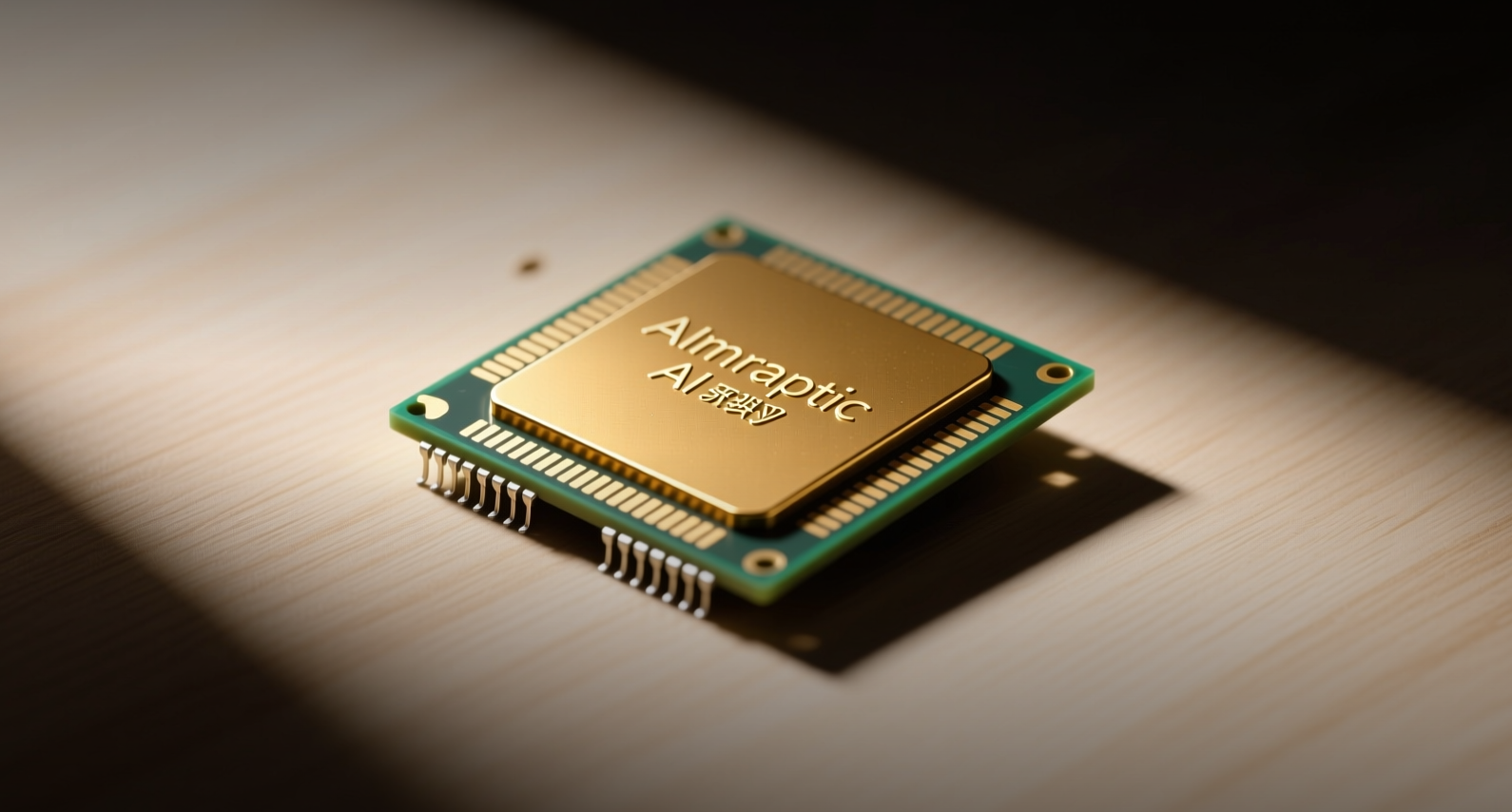
AI's biggest winners risk repeating one of technology's most expensive capital allocation errors.
Anthropic has edged past OpenAI to approach a $1 trillion private valuation, but tech veterans warn the industry's biggest AI companies risk repeating Intel's historic mistake of prioritizing share buybacks over manufacturing investment.
"Intel spent billions buying back its own shares to support the share price and let chip manufacturing technology just lie useless," Ian Thompson, a tech analyst and guest on the This Week in Tech podcast, said during episode 1,089. "And now they're paying the price for it."
Intel shares closed at $133.99 on June 18, up 263% year to date and 523% over the trailing year, as the company's turnaround under CEO Lip-Bu Tan gains traction. The chipmaker's Q1 FY2026 revenue reached $13.58 billion, up 7.2% year over year, with Data Center & AI revenue of $5.05 billion climbing 22%. But Thompson argued the recovery came too late — after years of underinvestment in manufacturing while buybacks consumed capital that could have funded process node development.
The warning comes as Anthropic's valuation — reportedly nearing $1 trillion — and OpenAI's $852 billion valuation reflect a market pricing AI companies for perfection. How these firms deploy their capital over the next three to five years, the panel argued, may determine whether they build durable competitive moats or repeat Intel's trajectory of squandering a technological lead.
The Buyback Trap That Cost Intel Its Lead
Thompson noted that share buybacks were illegal until the Reagan administration loosened restrictions in the 1980s, a regulatory shift that reshaped corporate capital allocation across the technology sector. Intel's experience offers a cautionary data point: the company spent tens of billions repurchasing its own stock while Taiwan Semiconductor Manufacturing Co. invested in advancing process nodes from 14nm to 7nm to 5nm. By the time Intel acknowledged the gap, it had lost its manufacturing edge to TSMC and Samsung Electronics.
Intel's current recovery — revenue up 7.2% year over year, with its foundry business generating $5.42 billion in Q1 FY2026 alone — shows the company is clawing back ground. CEO Lip-Bu Tan told investors that "the next wave of AI will bring intelligence closer to the end user, moving from foundational models to inference to agentic," a shift he said increases demand for Intel's CPUs and advanced packaging. But the turnaround required years of catch-up spending that buybacks had starved.
AI's Capital Allocation Crossroads
For Anthropic and OpenAI, the stakes are different but the principle is the same. Both companies are burning capital at unprecedented rates — OpenAI's reported losses are complicated by its nonprofit-to-for-profit conversion and non-cash stock compensation, while Anthropic's infrastructure costs scale with each new model generation. The panel's argument is that how these companies deploy their cash — toward research, computing infrastructure, and talent, versus financial engineering — will determine whether today's valuations hold.
The comparison extends beyond AI model makers. SpaceX, which went public this month at a $2.1 trillion valuation that has since climbed to $2.8 trillion, signed two major AI infrastructure agreements worth a combined $75 billion with Anthropic and Alphabet's Google Cloud. Those deals convert prior hardware investments into contracted cash flow, a capital allocation strategy that directly contrasts with Intel's buyback approach.
For investors, the Intel analogy raises a question that no AI valuation model can answer: whether today's frontier AI companies are building the equivalent of TSMC's manufacturing moat or Intel's buyback-fueled stock price. The answer will take years to emerge, but the panel's warning is that the capital allocation decisions made today will determine which path each company follows.
This article is for informational purposes only and does not constitute investment advice.