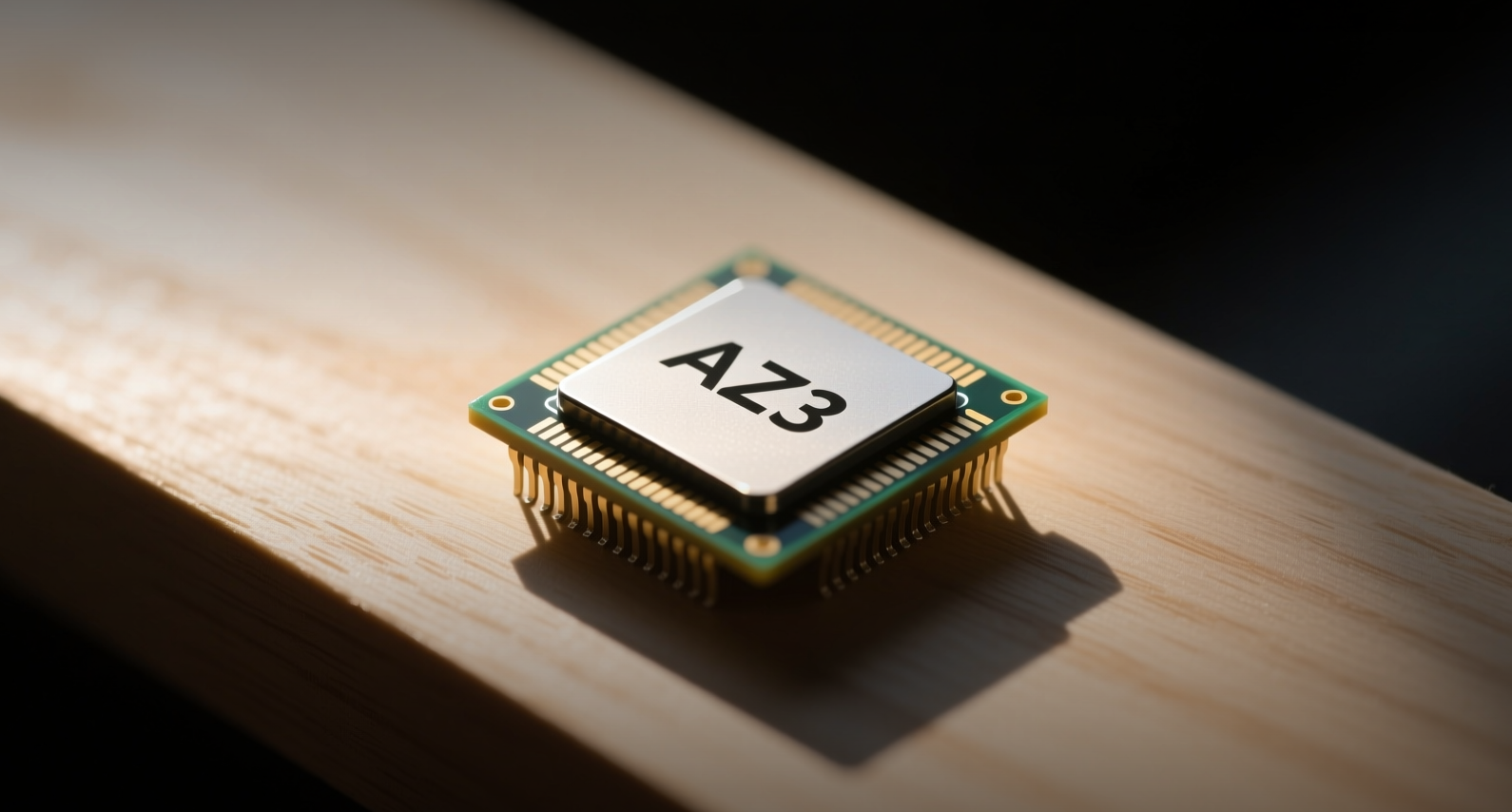
Amazon is designing custom chips for its most critical consumer devices, a strategic bet that on-device AI will define the next era of smart home hardware.
Amazon is building custom end-to-end silicon for its Echo Show 8, Echo Show 11 and Fire TV lines, the company's top hardware executive told CNBC, as the e-commerce giant pushes AI processing from the cloud onto consumer devices.
"We do make our own end-to-end silicon for the devices that we ship," Panos Panay, senior vice president of devices, Alexa and Leo at Amazon, said in an interview on CNBC's "The Tech Download" podcast. "On some of the more critical devices right now, our focus is end-to-end silicon, because to your point, if you really want that hardware and software connection ... and if we're going to go deliver this ambient experience in the home for people in the most secure way, we definitely need to think about how that end-to-end delivery of hardware comes together."
Amazon unveiled the AZ3 and AZ3 Pro chips in October, designed to run AI models locally rather than in the cloud. Many device makers see on-device AI as faster and more secure than cloud-dependent processing. The approach mirrors Apple's strategy of designing custom chips for iPhones and Macs, giving Amazon tighter control over hardware-software integration. Panay said the company still uses chips from suppliers such as Qualcomm for non-critical devices.
The custom silicon push comes as Amazon launches Alexa+, an upgraded version of its digital assistant that can handle complex queries, learn user patterns and tie together devices from Ring doorbells to Fire TVs. Running AI on-device reduces latency and improves privacy — two factors that could determine whether consumers embrace ambient computing in the home.
Beyond Screens and Apps
Panay said the company is thinking beyond traditional app-and-screen interfaces. "I think we might be moving away from a world of apps and screens," he said, adding that "conversation and context" will be more important for AI assistants. Asked what kind of gadgets the company was working on, Panay said: "When you think about the future of AI devices, you got to be super skeptical right now for anyone who tells you they know what they are. I have a lab full of devices."
Amazon's acquisition of Bee, a company that makes $49.99 AI wristbands capable of voice commands, list-making and note-taking, signals the direction. Panay confirmed a "whole roadmap of on-the-go devices" — gadgets people carry, talk to and collect data from. "So when you are back in the home or when you are at work, that connection stays consistent and contextual," he said. "You won't have to wait long" for an Amazon product in this category, he added.
The Competitive Landscape Heats Up
Amazon's chip strategy enters a market where every major tech company is racing to define the AI device form factor. Qualcomm CEO Cristiano Amon told CNBC last month that his company is working on 40 new AI-powered devices as consumer electronics firms search for the next hit product after the smartphone. Google is leveraging the Android operating system to push its Gemini AI assistant to more users, while Samsung is building many of its AI features on Gemini models. Alexa+ competes directly with OpenAI's ChatGPT and Google's Gemini for consumer mindshare.
For Amazon, Alexa+ serves as the anchor to lock users into its ecosystem of devices and e-commerce. Custom silicon gives Amazon a cost and performance advantage in running AI workloads on-device, potentially improving margins on hardware that has historically been sold near cost to drive service adoption. Amazon shares trade at roughly 22 times forward earnings. In-house chips could reduce the company's reliance on merchant silicon suppliers and lower the bill-of-materials cost across millions of devices shipped annually. The strategy also strengthens Amazon's competitive position against Apple, which has long used custom chips as a moat, and Google, which designs its own Tensor processors for Pixel devices. For investors, the central question is whether on-device AI can drive meaningful attach rates for Alexa+ subscriptions and e-commerce transactions through the Amazon ecosystem.
This article is for informational purposes only and does not constitute investment advice.