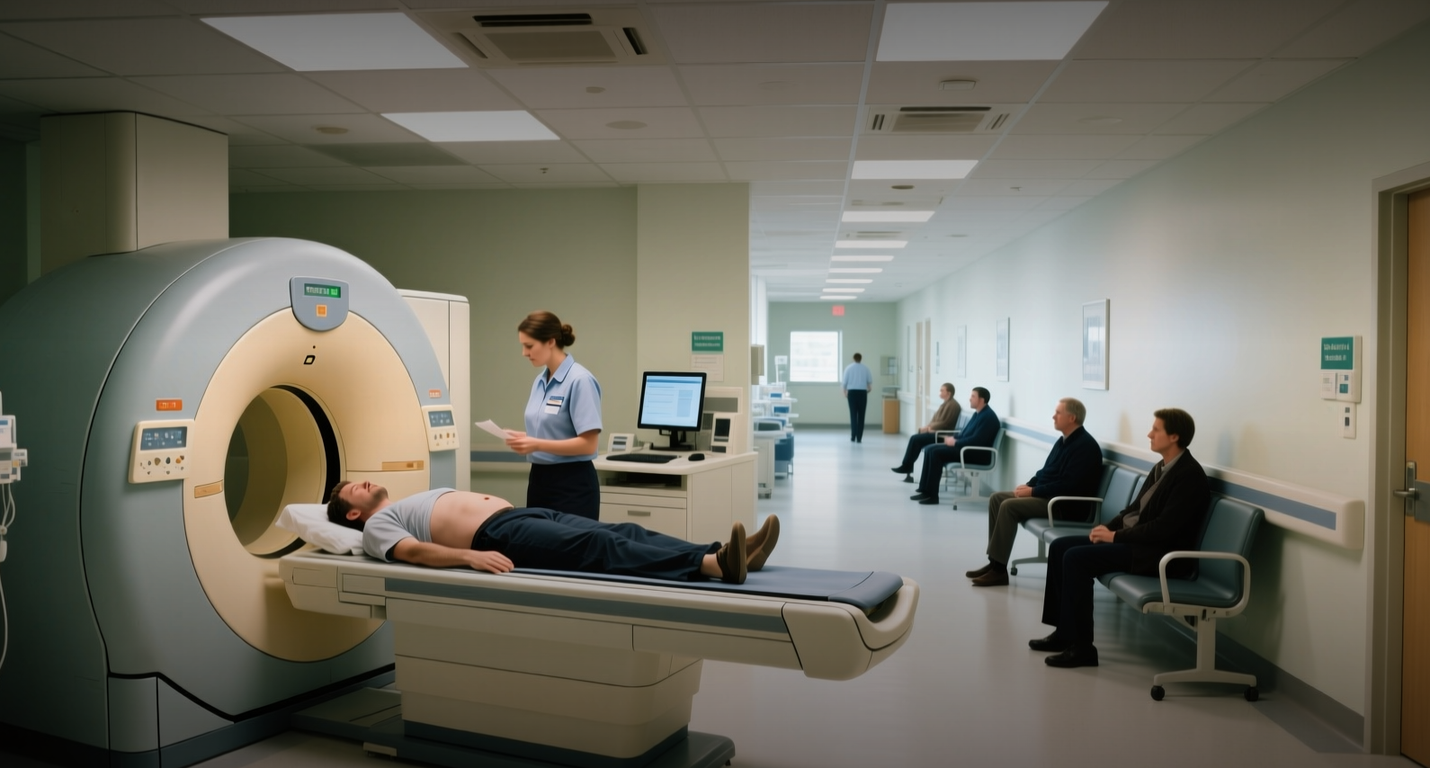
Alibaba Damo Academy's DAMO RADAR has become the first general medical imaging model to match expert radiologists, diagnosing 146 abdominal conditions from a single CT scan at an average AUC of 0.913, with the research published in Science on Sept. 18.
The model outperformed 23 of 26 radiologists in a head-to-head accuracy test, and the team behind it has released the model, code and training framework under an open-source license, according to the paper and the research team.
RADAR — Rapid Abdominal Diagnosis with AI and Radiology — was built with The First Affiliated Hospital of Zhejiang University School of Medicine and other hospitals. It covers 18 anatomical structures including the liver, pancreas, gallbladder, kidney, spleen and intestines. In an internal consecutive cohort of nearly 39,000 real-world cases, average AUC reached 0.913; on more than 24,000 CT scans from eight external hospitals using different scanners and regions, AUC held at 0.895. Tested on 27,000 emergency cases that were never part of its training objectives, AUC reached 0.904.
For liver, pancreatic, gastric and colorectal cancers, where the team used pathological biopsy as ground truth, AUC ranged from 0.891 to 0.984. In human-AI collaboration, radiologists reading with the model raised overall sensitivity by about 10% and cut average reading time by more than 30%. The configuration of a junior doctor plus AI exceeded the sensitivity of senior doctors reading alone.
The technical break from prior medical imaging AI is the training method. Earlier systems used supervised learning, which requires physicians to label CT slices one by one and limits the model to the diseases that were labeled. RADAR instead uses vision-language contrastive learning, learning from the pairing of existing CT images and their diagnostic reports. The team's core innovation is organ-level fine-grained alignment: the model first segments the liver, pancreas, gallbladder and kidney, then aligns each organ unit with the corresponding sentence in the report. A second technique, adaptive contrastive modeling, adjusts the distance between samples so that two healthy livers are not pushed apart as if they were different diseases.
The paper's scaling curve shows performance still rising with data volume, with no sign of saturation.
Open source cuts both ways for Alibaba
Releasing the weights and framework is the decision with the clearest commercial consequences. It removes the licensing moat that proprietary abdominal imaging vendors have relied on, and it lowers the cost for any hospital group or device maker to build on the model. Chinese medical imaging AI vendors including United Imaging Healthcare and Infervision have built businesses on narrow, single-indication models — pulmonary nodules being the most crowded — and RADAR's 146-disease coverage in one model attacks that product architecture directly.
Alibaba does not sell medical imaging software as a standalone product. The strategic value sits in Alibaba Cloud, where hospital deployments of a general imaging model create compute, storage and data workloads, and in the credibility it lends to the company's broader AI stack, including the Qwen model family. Damo Academy has published five papers in Nature Medicine on pancreatic, gastric and colorectal cancer detection, and the Science publication is the first time the journal has treated general medical imaging AI as a scientific problem rather than an engineering one, according to Zhang Ling, senior algorithm expert at Damo Academy.
The clinical pull is real. Xiao Wenbo, director of radiology at The First Affiliated Hospital of Zhejiang University, said the department's reaction was immediate. "AI can detect 146 diseases at one go among so many similar structures in the abdomen, with an AUC of around 0.9, which is completely beyond the expectation of all doctors," she said. A full abdominal CT report takes a senior radiologist at least 20 minutes, and her department of more than 300 staff processes thousands of scans daily.
The counterargument is monetization. Open-sourcing a model that took years and multiple top-hospital partnerships to build gives away the asset most likely to generate direct licensing revenue, and Alibaba has not disclosed any pricing, hospital contract or revenue target tied to RADAR. Zhang Jianpeng, senior algorithm expert at Damo Academy, framed the original problem in terms of scale: conquering one disease at a time takes two to three years, and there are tens of thousands of human diseases.
Alibaba's Hong Kong-listed shares have traded on the company's AI narrative through 2026, with cloud growth and Qwen adoption as the primary re-rating drivers. RADAR adds a healthcare vertical to that story but does not change near-term earnings. The more immediate read-through is for the medical imaging AI sector, where open-sourced expert-level performance compresses the pricing power of every vendor selling single-disease detection software.
This article is for informational purposes only and does not constitute investment advice.