
Key Takeaways:
- Alibaba targets $50 trillion AI addressable market, half of global GDP
- Joe Tsai unveiled full-stack AI strategy spanning energy, chips, cloud and apps
- Qwen-Robot Suite and XuanTie C950 chip signal shift from chatbots to physical AI
Key Takeaways:
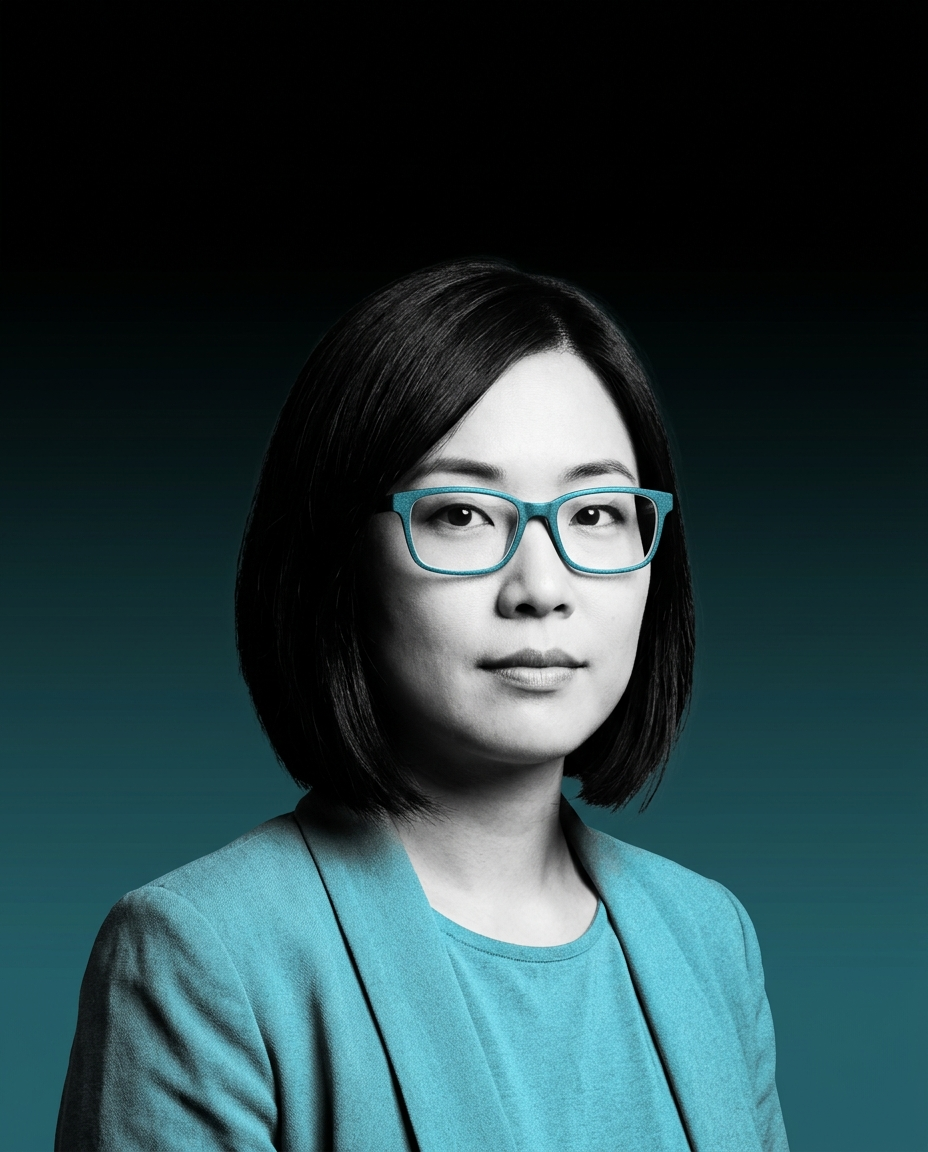
Alibaba Group Chairman Joe Tsai declared full-stack artificial intelligence the company's core future strategy at VivaTech 2026, framing a $50 trillion addressable market that spans every layer of the AI stack from energy to applications.
"Of the more than $100 trillion in global GDP, at least half is related to human productivity and human intelligence, which represents the total addressable market for AI," Tsai said at the Paris conference, according to a transcript of his remarks. He positioned Alibaba as uniquely capable of capturing that opportunity through vertical integration across chips, cloud infrastructure, foundation models and consumer applications.
Alibaba's advantage begins at the energy layer, where Tsai cited China's efficient and low-cost power supply as a structural edge for running AI workloads at scale. At the infrastructure and model layers, the company made early investments in cloud computing and custom silicon years before the current AI boom, and now owns Qwen, one of the world's most widely adopted open-source model families. At the application layer, Alibaba's ecosystem spans e-commerce, Quick Commerce, travel services and mapping — providing built-in deployment channels that pure-play AI companies lack.
The strategy extends well beyond chatbots. On June 16, Alibaba's Qwen team released the Qwen-Robot Suite, three foundation models for embodied intelligence: Qwen-RobotNav for mobility, Qwen-RobotManip for manipulation, and Qwen-RobotWorld for physics simulation. Qwen-RobotNav achieves 76.5 percent success on the VLN-CE RxR benchmark for vision-and-language navigation and 90 percent tracking on EVT-Bench. Qwen-RobotManip, trained on roughly 38,100 hours of open-source robot data, ranks first on RoboChallenge Table30-v1, outperforming prior approaches by 20 percent. Qwen-RobotWorld processes 8.6 million video-text pairs spanning 200 million frames and scores perfectly on physics adherence tests for Newton's laws, mass conservation and fluid dynamics.
The Chip and Model Stack Behind the Bet
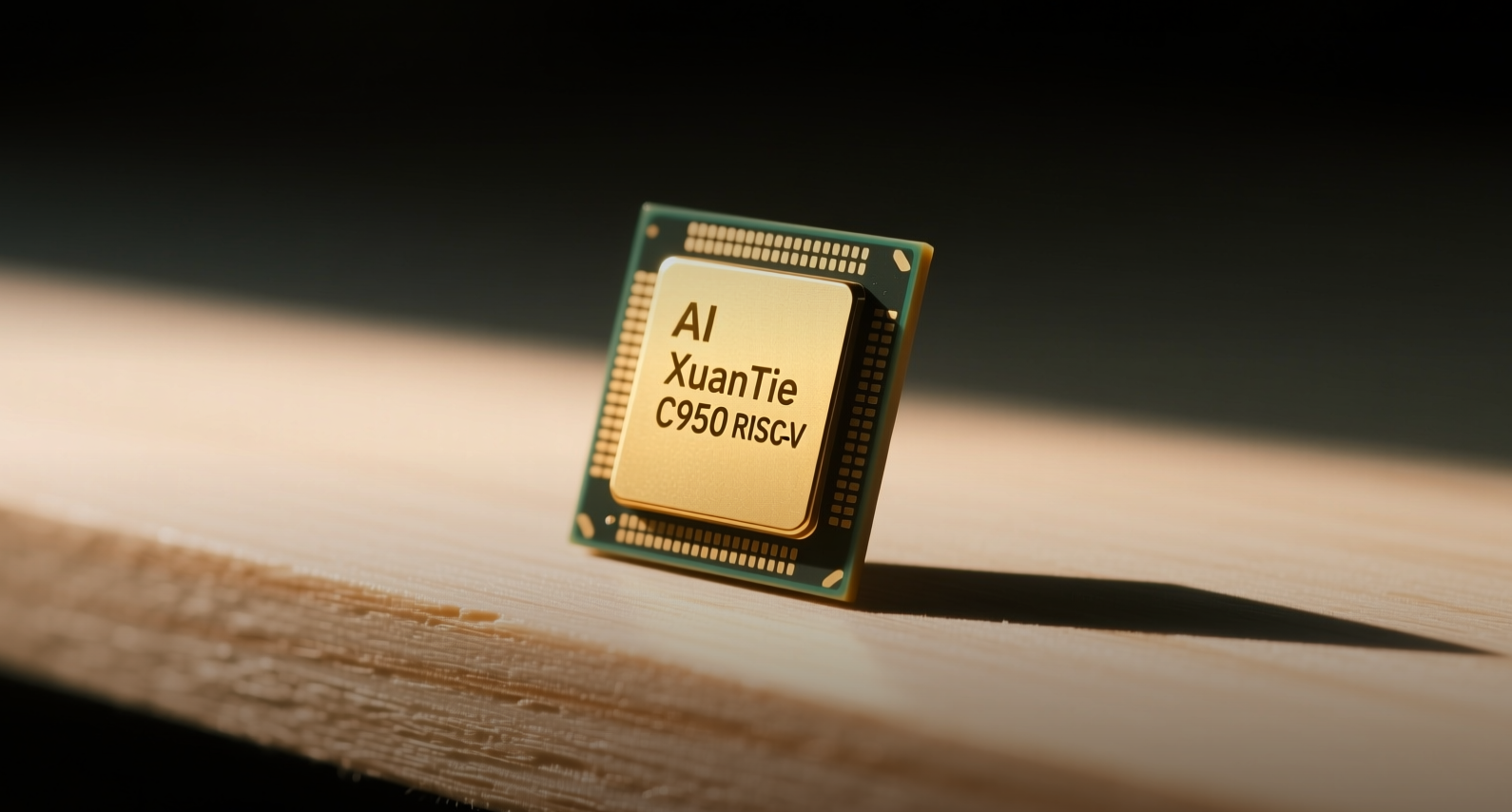
Alibaba also unveiled the XuanTie C950, a 5-nanometer RISC-V processor designed specifically for agentic AI workloads — a category far more demanding than chatbot inference. Agents require persistent memory, multi-step coordination and repeated tool calls, all of which strain conventional CPU architectures. The C950 joins Alibaba's Qwen3.7-Max model, introduced in May, which sustained a 35-hour autonomous run involving more than 1,000 tool calls, according to the company.
The combination positions Alibaba as the only Chinese company spanning the full AI value chain: custom silicon through its Pingtouge semiconductor unit, cloud infrastructure through Alibaba Cloud, foundation models through Qwen, and enterprise/consumer applications through Taobao, Fliggy and Ele.me. That vertical integration contrasts with Western peers like Nvidia, which dominates hardware but does not operate cloud or application layers, and OpenAI, which controls models and applications but not chips or cloud.
Tsai argued that Chinese enterprises are currently the primary driving force behind global AI open-source development, citing Alibaba's contributions to open-sourcing frontier models. The Qwen family has become one of the most downloaded open-source model series on Hugging Face, competing with Meta's Llama and Mistral AI's open-weight releases.
What This Means for Investors
Alibaba's full-stack AI push carries implications beyond the company itself. The XuanTie C950's 5nm RISC-V design signals growing compute demand for agentic workloads, which could benefit advanced foundry capacity utilization at TSMC even if Alibaba's chip remains internal. The Qwen-Robot Suite, while years away from real-world deployment at scale, opens a potential software revenue stream in robotics that no Western cloud provider has yet monetized.
The risk is execution timing. Alibaba must convert its technology demonstrations into paying enterprise and cloud contracts before the spend erodes margins. Competitors including ByteDance, Baidu and Zhipu AI are also pushing beyond chatbots, and Western rivals like Google DeepMind and Nvidia are pursuing similar embodied AI goals. Alibaba's open-source strategy differentiates it from competitors relying on proprietary data, but the gap between a controlled demo and a reliable production system remains the hardest problem in robotics.
Alibaba shares traded in Hong Kong at HK$102.10 on June 18, down 2.8 percent on the session. The stock has gained roughly 18 percent year-to-date, partly on optimism around its AI strategy.
This article is for informational purposes only and does not constitute investment advice.
