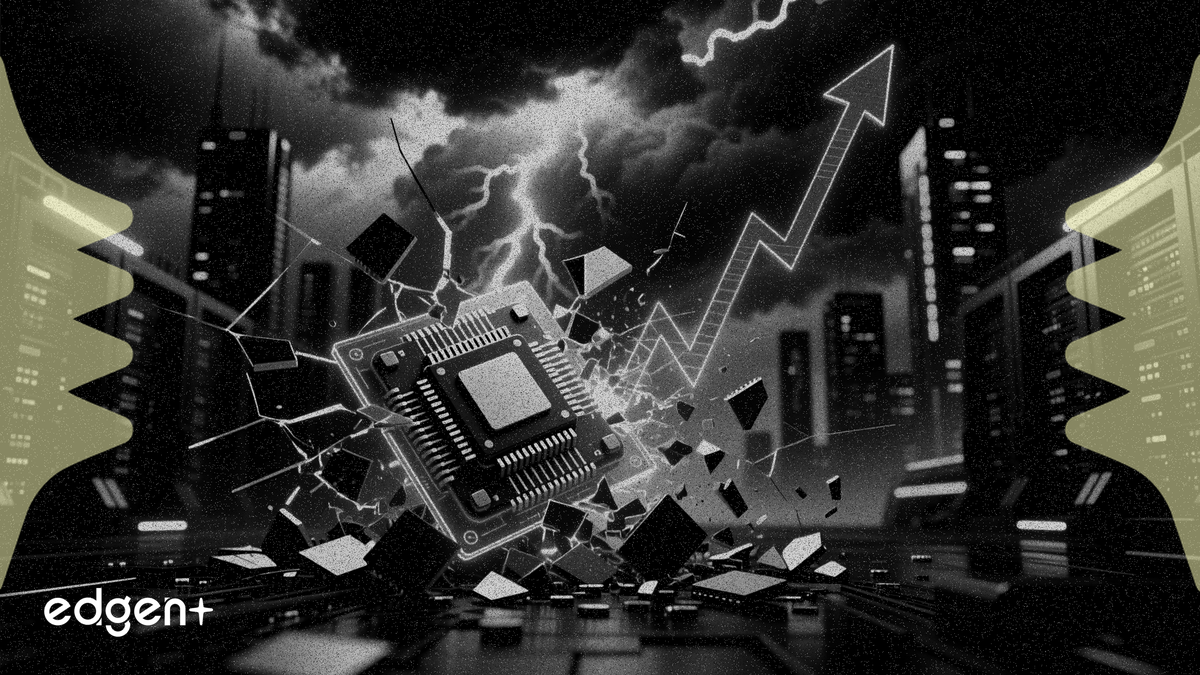
The AI-driven stock rally that has propelled markets to record highs is showing signs of fatigue, with technical indicators now mirroring the setup that preceded a major correction in gold prices.
The Philadelphia Semiconductor Index fell 3.5% Friday as soaring Treasury yields and persistent inflation finally broke the momentum in AI-related stocks that had carried the broader market for weeks. The sharp pullback puts the semiconductor sector in a position that technically mirrors gold's setup just before its January 2026 price collapse, according to a recent analysis by GF Strategy.
"The hot jobs number takes March off the table for cuts," said Michael Wilson, chief equity strategist at Morgan Stanley, capturing the market's rapid repricing of Federal Reserve policy amid stubborn inflation.
The semiconductor index had surged 52.72% since April, but the rally met a wall of resistance as the 10-year Treasury yield surged to 4.573%. The selling pressure hit market leaders hard, with Nvidia falling 4%, while Advanced Micro Devices and Micron Technology each dropped around 5%.
The convergence of hot inflation data, rising oil prices above $100 a barrel, and the lack of a trade breakthrough from the U.S.-China summit has shifted investor focus from AI-driven growth to macroeconomic risks. With markets now pricing in a 40% chance of a December rate hike, the high-flying valuations of technology stocks face a challenging environment, suggesting the potential for more volatility ahead.
A Rally Running on Fumes?
The comparison to gold's January 2026 peak highlights the current vulnerability in the AI trade. The GF Strategy report notes that the realized volatility on the semiconductor index has exceeded the 75th percentile, a level that historically signals caution. Furthermore, the index's price had deviated significantly from its 20-day moving average, a sign of an overextended run similar to gold before its sharp decline. While the long-term growth story for artificial intelligence, driven by strong earnings expectations, remains intact, the short-term technical picture suggests a period of consolidation or correction is likely as the market digests its recent gains.
Macro Headwinds Intensify
Three major headwinds converged to halt the rally. First, a string of hotter-than-expected inflation reports, including CPI, PPI, and import prices, sent Treasury yields to multi-year highs, with the 30-year yield climbing above 5.1%. Higher yields mechanically pressure growth stock valuations by increasing the discount rate on future earnings. Second, crude oil pushed back above $104 a barrel, fueling concerns that inflation will remain persistent and limit the Federal Reserve's ability to ease policy. Finally, the U.S.-China summit in Beijing concluded without the major policy agreements investors had hoped for, removing a potential positive catalyst and adding to the market's disappointment. This combination created a powerful incentive for investors to take profits in the market's best-performing sector.
This article is for informational purposes only and does not constitute investment advice.