

Adobe's Creative Agent AI now powers five flagship Creative Cloud applications, transforming generative AI from a standalone feature into an embedded productivity layer for millions of subscribers.
Adobe's Creative Agent AI now powers five flagship Creative Cloud applications, transforming generative AI from a standalone feature into an embedded productivity layer for millions of subscribers.
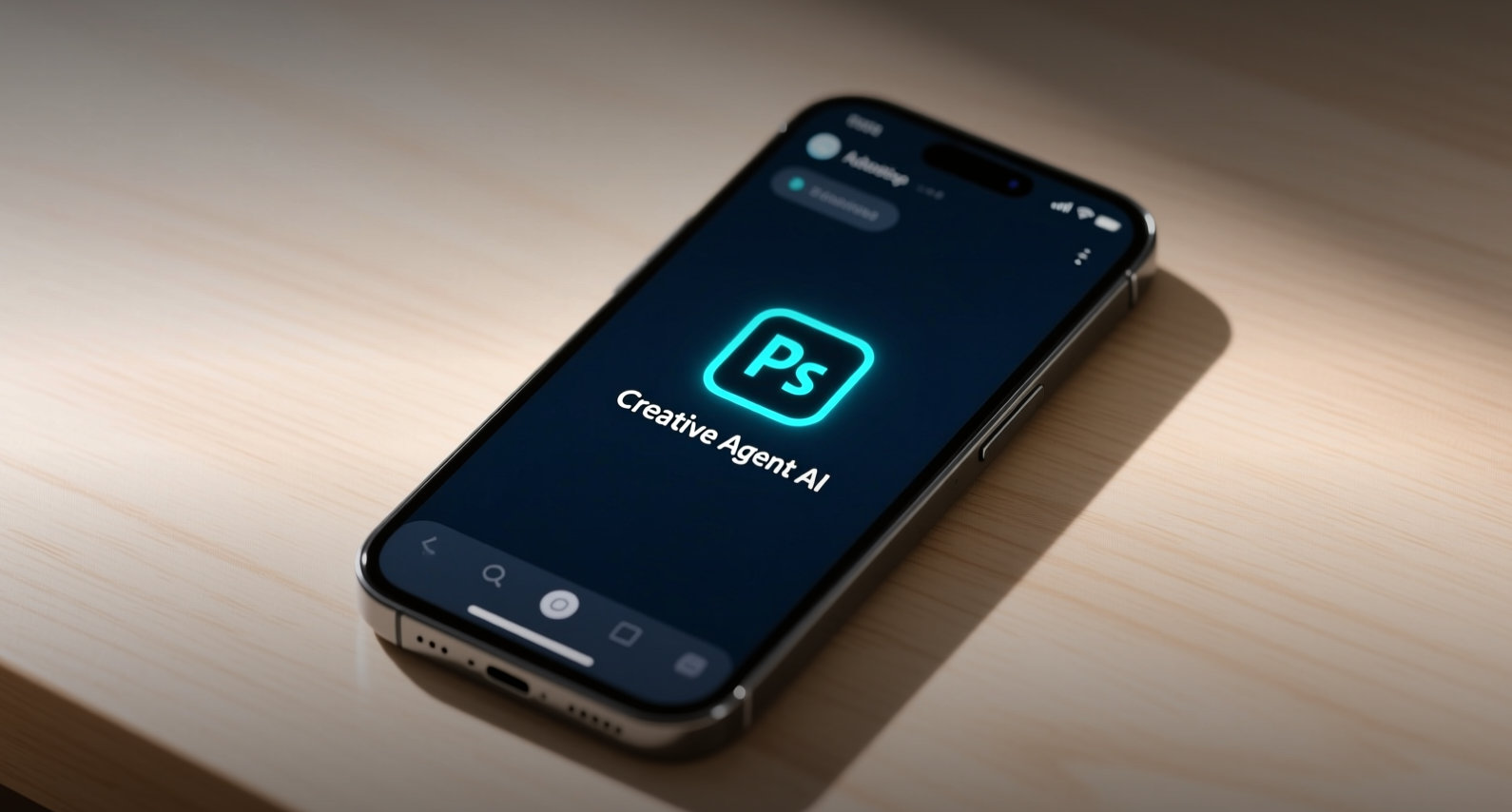
Adobe is embedding its Creative Agent AI across Photoshop, Premiere, Illustrator, InDesign and Frame.io, turning generative AI from a standalone feature into an integrated productivity layer for its creative subscribers. The expansion, announced June 18, brings agentic capabilities that can orchestrate multi-step workflows from simple text descriptions.
"Every creative now has an agent capable of helping them execute across every app and platform where they work," David Wadhwani, president of Adobe's Creativity & Productivity business, said.
The AI Assistant in Firefly can generate brand kits, short product videos and storyboards from text prompts. In Photoshop, users describe outcomes such as swapping backgrounds or resizing assets, and the assistant executes the edits as adjustable layers. The rollout comes as 75% of creators describe creative AI as integrated or essential to their workflow, according to Adobe's Creators' Toolkit Report, which surveyed more than 16,000 creators globally. Adobe is also extending its tools to third-party platforms including OpenAI's ChatGPT, Anthropic's Claude and Microsoft 365 Copilot.
The deeper AI integration could boost subscriber retention and average revenue per user at a time when ADBE shares have lost 44.2% year to date, underperforming the broader software industry. The stock trades at a price-to-earnings ratio of 7.55, a steep discount to the industry average of 19.84, suggesting the market has yet to price in the revenue potential from AI-powered features.
AI Assistants Target Repetitive Workflows
The Creative Agent operates as a specialist within each application. In Premiere, it sorts assets into bins, batch renames clips and assembles rough cuts. In Illustrator, it can generate 50 versioned files from a spreadsheet or run pre-flight checks for print errors. The goal is to automate tedious setup work so creators can focus on craft — a principle that 85% of surveyed creators said must remain theirs, per Adobe's report.
The push follows a broader industry shift visible at Computex 2026, where NVIDIA demonstrated its RTX Spark platform running Adobe's AI tools locally. The platform, built around a 20-core Grace CPU co-developed with MediaTek, executed Photoshop asset generation and Premiere scene edit detection without reaching for cloud servers. Hardware-level AI acceleration is becoming a prerequisite for creative software, and Adobe's integration positions it to capture demand from the growing AI PC market.
Can Adobe Defend Its Moat Against AI-Native Rivals?
Adobe's strategy mirrors moves by Alphabet, which expanded its generative AI stack with Lyria 3 Pro, and Salesforce, which allocated $1 billion through its venture capital fund for generative AI since March 2023. Adobe's advantage lies in its existing product suite and subscriber base: high switching costs, strong customer loyalty and recurring subscription revenue provide a durable competitive edge. The company generated strong free cash flow and maintained solid operating margins even as it invested in AI capabilities.
But the competitive threat is real. AI-native tools from startups and large language model providers are eroding the boundaries of traditional creative software. By embedding AI directly into its flagship apps and extending its reach to platforms like ChatGPT and Gemini, Adobe is betting that integration — not isolation — will keep creators inside its platform. The bet carries implications for ADBE's subscriber growth and pricing power in the coming quarters.
ADBE shares, trading at 7.55 times earnings against an industry average of 19.84, reflect deep skepticism about the company's growth trajectory. If Creative Agent adoption drives measurable improvements in subscriber retention or ARPU, the valuation gap could narrow. If AI-native tools erode Adobe's market share faster than expected, the discount may prove justified. The next earnings report will offer the first concrete data on whether the AI strategy is translating into revenue.
This article is for informational purposes only and does not constitute investment advice.
