

AAC Technologies joined Intel China's Data Center Liquid Cooling Innovation Acceleration Program, sending its Hong Kong-listed shares up 2.03% to HKD40.28 on HKD153 million of turnover.
AAC Technologies joined Intel China's Data Center Liquid Cooling Innovation Acceleration Program, sending its Hong Kong-listed shares up 2.03% to HKD40.28 on HKD153 million of turnover.
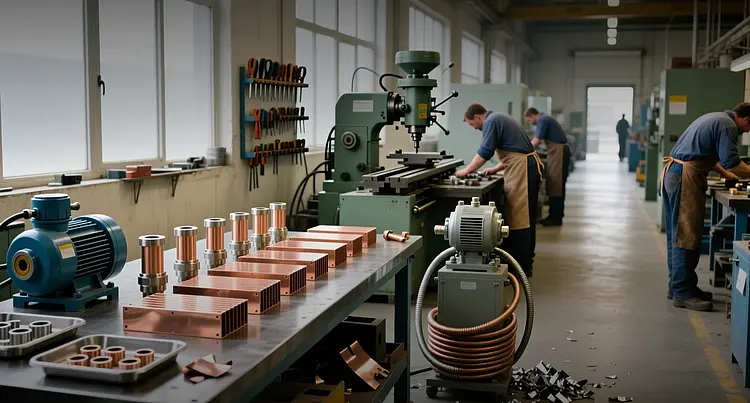
AAC Technologies (02018.HK) climbed 2.03% to HKD40.28 after the components maker secured a place in Intel's China data center cooling program, giving it a validation channel into AI server supply chains for cold plates, quick connectors and coolant distribution units.
The Shenzhen-based company said the two parties will cooperate on liquid cooling research and development, product innovation, solution validation and industry development, with work spanning core components through complete-node and rack-level systems. AAC did not disclose the financial terms of the collaboration, the number of engineers assigned, or a revenue target for the program.
Traders pointed to three drivers behind the move: the Intel program announcement, a broader bid for Hong Kong-listed thermal and connector suppliers tied to AI server buildouts, and short covering. Short selling in AAC totaled USD32.36 million as of 12:25 HKT on Sept. 24, equal to 25.807% of turnover — a ratio that leaves the stock exposed to sharp reversals when positive news lands.
The shares peaked at HKD41.64 intraday before giving back part of the gain, on 3.7652 million shares and HKD153 million of turnover. AAC's quote line showed a separate gain of HKD0.780, or 1.976%, in the same session.
The scope matters more than the headline. Intel China's acceleration program is a validation and integration channel, not a purchase order. AAC is being positioned to supply the parts that sit closest to the silicon — cold plates that draw heat off CPUs, direct-to-chip loops for memory and solid-state drives, and UQD/QD quick-disconnect connectors that let racks be serviced without draining a loop.
Above the component layer, the partnership covers manifolds and coolant distribution units (CDUs), the pumps-and-heat-exchanger assemblies that circulate coolant through a rack. That is where the money concentrates. Dell'Oro Group research director Alex Cordovil told the 2026 AI Infra Summit that a 1 megawatt CDU was considered large two years ago, while 5MW and 10MW units are now in use, with launches approaching the 10MW mark expected by year-end. Dell'Oro projects 60 gigawatts of new data center capacity per year by 2030, up from roughly 5GW annually five years ago.
The demand pull is visible in deal pricing. Ecolab closed its acquisition of CoolIT Systems, a direct liquid cooling supplier, for about $4.75 billion, with CoolIT's year-to-date sales growing more than 100%. The United Nations University projects data centers powering AI will consume 945 terawatt-hours of electricity by 2030.
For AAC, the strategic question is whether a components supplier can hold margin at the system level. Cold plates and quick connectors are competitive, price-transparent categories where Asian manufacturers including AVC and Auras Technology already compete. CDUs and rack-level integration carry higher content per deployment but require validation cycles that Intel's program is designed to shorten. AAC's existing business is built on acoustics, optics and precision mechanics for smartphone customers such as Apple — a franchise that Citi flagged as still healthy, noting iPhone 18 Pro and Pro Max first-week delivery times show demand remains resilient.
The positioning data is the near-term swing factor. A 25.807% short-selling ratio on USD32.36 million of turnover means roughly one in four shares traded that morning was sold short. That cuts both ways: it explains why a program announcement with no disclosed revenue moved the stock 2%, and it means any disappointment on execution — a delayed validation, a lost socket design win, or a soft quarterly thermal revenue print — can unwind quickly.
AAC has not disclosed how much of its revenue currently comes from data center thermal products, which makes the partnership's contribution impossible to size from public filings. Investors will watch the next interim results for any segment disclosure on thermal and AI server content, and for confirmation that the Intel program has moved from validation into volume production. Until then, the stock trades on the narrative rather than the numbers.
This article is for informational purposes only and does not constitute investment advice.