Three of the world's top AI executives are calling on Congress to mandate synthetic DNA screening, warning that rapidly improving artificial intelligence tools could help bad actors develop biological weapons.
Three of the world's top AI executives are calling on Congress to mandate synthetic DNA screening, warning that rapidly improving artificial intelligence tools could help bad actors develop biological weapons.
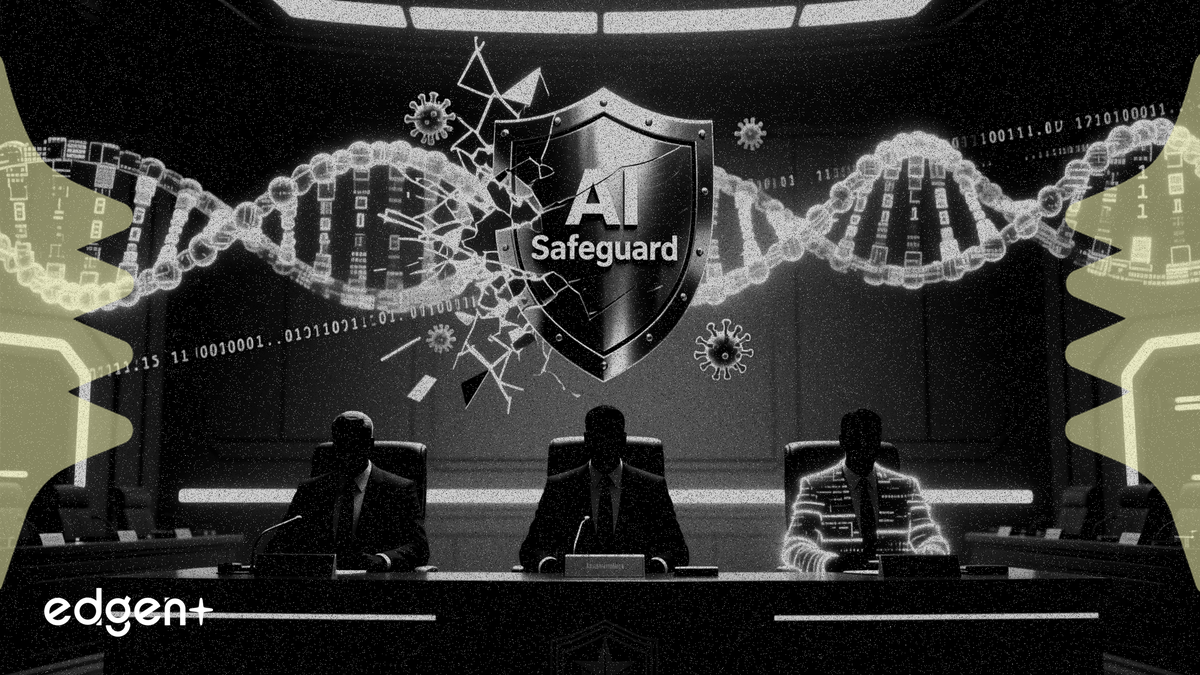
Three of the world's top AI executives are calling on Congress to mandate synthetic DNA screening, warning that rapidly improving artificial intelligence tools could help bad actors develop biological weapons.
OpenAI's Sam Altman, Anthropic's Dario Amodei and Google DeepMind's Demis Hassabis signed a letter urging Congress to require companies selling synthetic nucleic acids to screen customer orders for dangerous combinations, citing the risk that AI could erode knowledge barriers historically preventing bad actors from obtaining biological weapons.
"AI systems are improving rapidly, and alongside incredible benefits to science and medicine, there is a real possibility that the knowledge barriers which have historically prevented bad actors from obtaining biological weapons will meaningfully erode," the letter says.
The letter was organized by two tech-focused think tanks and also signed by Microsoft AI chief Mustafa Suleyman and Meta's chief AI officer Alexandr Wang. A Microsoft study found that AI tools can now design gene sequences that mimic dangerous proteins and evade existing safety checks, according to the source material.
The push comes after President Trump signed an executive order on AI oversight and cybersecurity Tuesday, shifting from a hands-off approach. The White House last year said it would replace the Biden-era gene screening framework with its own guidelines but has not yet published a replacement policy.
The Regulatory Gap
The previous Biden administration required federal funding recipients to screen synthetic gene orders, but Trump revoked that framework in one of his first executive actions in January 2025. Proponents of the new letter say Congress should pass a law applying to all purchasers of synthetic nucleic acids, not just those receiving federal funds. Several bills have been proposed but have not gained traction, leaving a patchwork of voluntary industry standards.
The synthetic biology sector, valued at roughly $14 billion in 2024 according to industry estimates, relies on custom DNA and RNA sequences for applications ranging from vaccine development to agricultural biotechnology. Companies such as Twist Bioscience, Integrated DNA Technologies and GenScript dominate the gene synthesis market and would be directly affected by any new screening requirements.
Trump's executive order this week requires model developers to implement cybersecurity protocols and report safety testing results, though it stops short of the mandatory screening the CEOs are now seeking. A White House official said the administration is committed to balancing innovation and safety.
Industry Divide Over Compliance Costs
Opponents argue it is subjective which combinations of nucleic acids are considered dangerous and warn that compliance costs could hurt startups. Dean Ball, a former Trump AI adviser at the Foundation for American Innovation, said the costs are worth it given the risks. "If you're synthesizing the stuff that yields biological life and viruses, we're asking you to screen to see whether it is dangerous in some way," Ball said. "That seems like a reasonable thing for society to insist upon."
Altman met with White House officials and lawmakers Wednesday to discuss OpenAI's proposal for stronger requirements for model developers. The company recently launched a program using its science-focused model to work with the federal government on preventing biological risks.
The letter represents a rare area of agreement among rival AI executives who often disagree on policy. Altman and Amodei typically take opposing stances on AI regulation, with Anthropic supporting stronger rules than others in the industry. Hassabis shared the 2024 Nobel Prize for his work on an AI platform that predicts protein structures and accelerates drug discovery.
For major technology companies including Microsoft, Google and Meta, proactive safety measures could reduce long-term regulatory risk. But the push for mandatory screening also creates potential liability for AI model developers whose tools could be used to design dangerous sequences, adding a new dimension to the debate over AI accountability.
The International Gene Synthesis Consortium, an industry group whose members include Twist Bioscience and GenScript, already screens orders voluntarily. A mandatory federal requirement would ensure all suppliers face consistent standards rather than creating incentives for bad actors to seek out unregulated providers.
This article is for informational purposes only and does not constitute investment advice.
